Email SIT Finder Update: All Credentials Bundled Entity

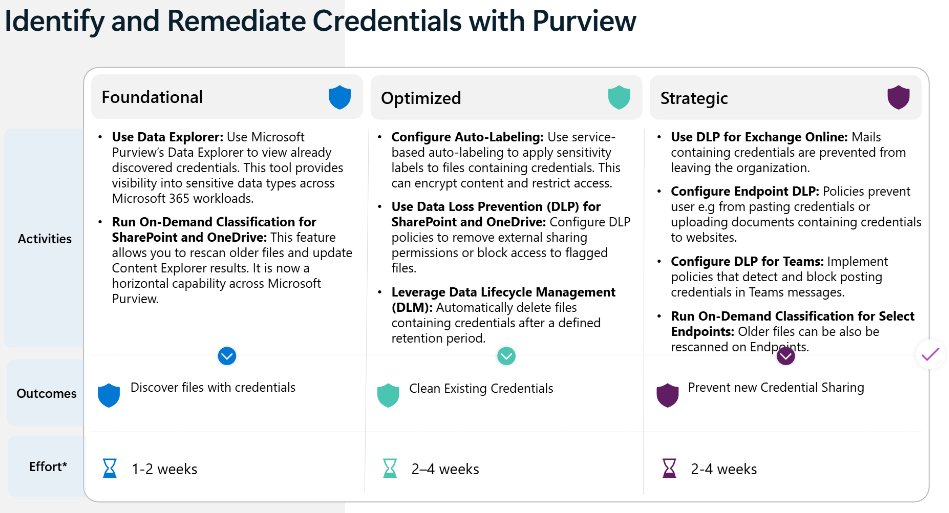
Found this nugget buried in the Purview Blueprints Github repo. Figured I'd take a crack at integrating credential SITs into my EXO SIT Finder. The "All Credentials" Bundled SIT is multitudinous and complex, as you can see in the linked Learn Doc below. Current SITs being scanned via the script are:
→U.S. SSN
→Credit Card Number
→U.S. Bank Account
→GitHub PAT
→Google API Key
→Slack Token
→Azure Storage SAS
→Azure Storage Account Key
→JWT Bearer Token
→Azure SQL Connection String
→Generic Client Secret / API Key
→General Password
False positives were of course a big concern of mine with this particular update; however, confidence scoring helps with that, and decoupling the deletion script from the reporting script allows you to report on alleged matches without the risk of accidental data deletion.
I know some of you have asked for country-specific SITs, and I promise those are coming. Just got a little distracted 👀
 chrfox
Previous blogs on this topic:
 Matthew Silcox
GitHub Repo:
 MatthewSilcox